Positive Pregnancy Test Consultation in Vizag | Expert Early Care
Table of Contents
Positive Pregnancy Test Consultation in Vizag | Expert Early Care
Seeing two parallel lines or a distinct “+ ” symbol on a home pregnancy test triggers a rush of emotions—unfiltered joy, excitement, and often a touch of nervousness about what comes next. Whether you have been actively tracking ovulation for months or were caught completely off guard, your immediate next step is identical: seeking a positive pregnancy test consultation in Vizag.
While over-the-counter urine tests are convenient, a clinical consultation with a qualified Obstetrician & Gynecologist (OB-GYN) transitions you from a home kit result to medically verified care. From confirming embryonic viability to tailoring your early nutrition and ruling out complications, early clinical guidance sets the foundation for a healthy pregnancy.


This comprehensive guide covers everything you need to know after a positive test in Visakhapatnam: why a medical evaluation is essential, what happens during your first visit, critical early diagnostics, dietary protocols, cost expectations across Vizag, and answers to 15 key questions.
1. Why a Clinical Consultation is Essential After a Positive Home Test
Home pregnancy test kits work by detecting human Chorionic Gonadotropin (hCG)—a hormone secreted by placental tissue shortly after a fertilized egg implants in the uterine wall. While high-quality home kits claim over 99% accuracy under ideal laboratory conditions, real-world factors can lead to misinterpretations.
The Limits of Home Test Kits
- Faint Lines: A faint second line usually indicates early pregnancy, but drying evaporation lines can easily be mistaken for positive results.
- Chemical Pregnancies: Very early pregnancy losses (occurring shortly after implantation) can produce a temporary positive home test before bleeding starts.
- Lack of Structural Insights: A home test cannot tell you where the embryo has implanted or whether there is a detectable heartbeat.
Diagnostic Progression: From Home Test to Clinical Assurance
 ─────────────────────────────────────────────────────────────────────────────
 Home Urine Test      │ Detects urine hCG presence (Qualitative)
                      │
 Serum Beta-hCG Test  │ Measures exact blood hCG levels & doubling velocity
                      │
 Early Clinical Scan   │ Confirms intrauterine position, cardiac flicker, & EDD
 ─────────────────────────────────────────────────────────────────────────────
Key Clinical Benefits of an Early Consultation:
- Rule Out Ectopic Implantation: Early physical exams and ultrasound imaging confirm that the gestational sac is safely located inside the uterus, rather than in a fallopian tube.
- Verify Viability: Evaluating hormone trends and embryonic cardiac activity confirms that the pregnancy is progressing as expected.
- Accurate Gestational Dating: Pinpointing your Expected Date of Delivery (EDD) using clinical crown-rump measurements rather than relying solely on period calculations.
- Immediate Medication Audits: Reviewing existing prescriptions to safely pause or replace medications that could affect early embryonic development.
2. When Should You Book Your Consultation in Vizag?
A common misconception is that expecting mothers should wait until their second or third month before seeing a doctor. In modern obstetrics, early evaluation is standard practice.
Ideal Timing Guidelines
- Immediate Booking (Within 2–5 Days of Positive Test): Recommended if you have a history of miscarriages, ectopic pregnancy, polycystic ovary syndrome (PCOS), thyroid imbalances, diabetes, or if you experience lower abdominal cramping or light spotting.
- Standard Booking (5 to 6 Weeks from Last Menstrual Period): Ideal for healthy, asymptomatic pregnancies. Visiting around 1 to 2 weeks after your missed period allows your doctor to combine your consultation with an early transvaginal ultrasound (TVS) to check for a heartbeat.
3. What Happens During Your Consultation?
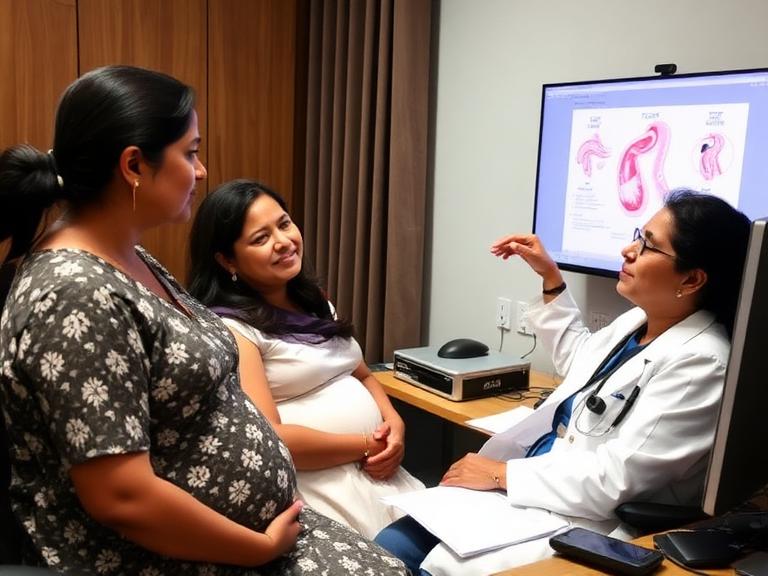
Knowing what to expect during your first visit helps ease any anxiety. A thorough consultation in Visakhapatnam generally follows four key clinical steps:
Step 1: Clinical History & Intake ──► Step 2: Vital Signs & Physical Assessment
                                                                │
Step 4: Custom Antenatal Plan    ◄── Step 3: Confirmatory Diagnostics & Imaging
Step 1: Detailed History Taking
Your OB-GYN will review:
- The exact date of your Last Menstrual Period (LMP) and your typical cycle regularity.
- Details of past pregnancies, deliveries, or miscarriages.
- Pre-existing health conditions (such as hypertension, thyroid issues, or asthma).
- Current medications, nutritional supplements, and lifestyle habits.
Step 2: Physical & Vital Assessment
Baseline physical checks include evaluating blood pressure, body mass index (BMI), pulse rate, thyroid gland swelling, and a gentle abdominal check.
Step 3: Diagnostic Verification & Baseline Testing
Your physician will order specific confirmatory tests:
- Serum Quantitative Beta-hCG: A blood test that measures exact hCG concentrations to monitor early hormone growth.
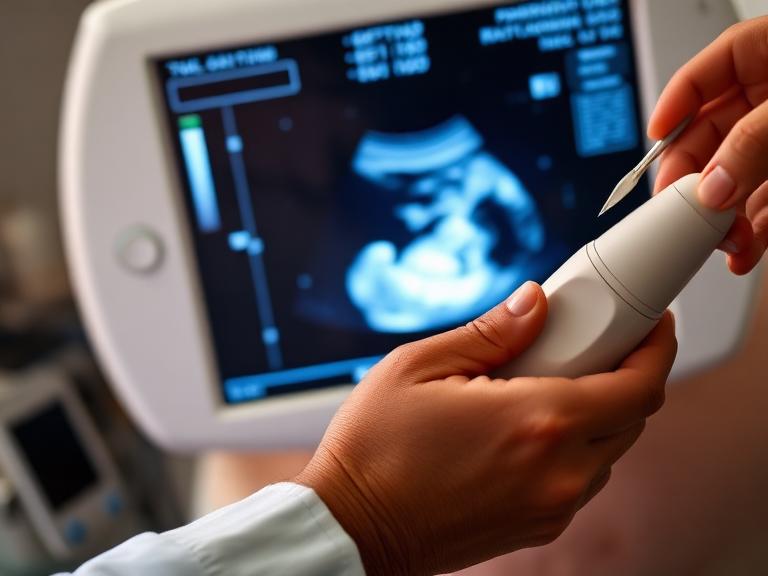
- Early Ultrasound Scan: A transabdominal or transvaginal scan to confirm gestational sac location and evaluate the fetal pole.
- Baseline Antenatal Blood Panel: Checking blood group, Rh factor, hemoglobin levels, blood sugar, thyroid profile, and infectious disease screenings.
Step 4: First-Trimester Guidance & Prescription
Your doctor will prescribe early prenatal supplements—focusing on folic acid—and share personalized recommendations for diet, work routines, travel, and managing morning sickness.
4. Key Early Pregnancy Diagnostics Decoded
Understanding your test results helps you stay informed during discussions with your physician.
| Diagnostic Investigation | Clinical Purpose | Normal Early Progression |
| Serum Quantitative Beta-hCG | Measures exact blood hCG levels ($\text{mIU/mL}$) | Levels roughly double every 48 to 72 hours in early normal pregnancies |
| Transvaginal Ultrasound (TVS) | Visualizes pelvic anatomy and early gestational structures | Gestational sac visible at 4.5–5 weeks; cardiac flicker at 6–6.5 weeks |
| Blood Group & Rh Factor | Checks for mother-fetal blood compatibility risks | Identifies Rh-negative mothers who may need Anti-D protection |
| Thyroid Stimulating Hormone (TSH) | Checks thyroid function critical for brain development | Target TSH during first trimester is typically kept below $2.5 \text{ mIU/L}$ |
| Fasting / Random Blood Sugar | Identifies pre-existing or early gestational diabetes | Establishes baseline glucose control for safe dietary planning |

5. Early Medical Red Flags: When to Seek Immediate Attention
While minor bodily changes like mild fatigue or light uterine stretching are normal, certain symptoms require prompt medical review.
Important Warning: Contact your doctor or visit an emergency care facility immediately if you experience any of the following:
- Sharp or Persistent Unilateral Pelvic Pain: Can be an early sign of an ectopic pregnancy.
- Moderate to Heavy Vaginal Bleeding: Requires immediate assessment for threatened miscarriage or cervical changes.
- Severe Dizziness or Fainting Spells: May indicate internal bleeding or significant blood pressure drops.
- Severe, Continuous Vomiting: (Hyperemesis Gravidarum) Can quickly lead to dehydration and electrolyte imbalances.
- High Fever ($>100.4^\circ\text{F}$ / $38^\circ\text{C}$): Requires evaluation to rule out pelvic or systemic infections.
6. Essential First-Trimester Care Guidelines
During your positive test consultation, your doctor will outline core lifestyle and dietary adjustments to support early embryonic development:
1. Daily Folic Acid Supplementation
Folic acid (Vitamin B9) is vital for proper neural tube development, which forms the foundation of the brain and spinal cord during the first 28 days of pregnancy. Starting a daily supplement of $400\text{–}500 \text{ mcg}$ immediately reduces the risk of neural tube defects.
2. Dietary Adjustments
- Prioritize Nutritious Foods: Include fresh green vegetables, lentils, cooked eggs, dairy, whole grains, nuts, and clean lean proteins in your daily meals.
- Avoid High-Risk Foods: Stay away from unpasteurized milk products, raw seafood, undercooked meat, and unwashed produce.
- Manage Morning Sickness: Eating small, frequent meals rich in complex carbohydrates and drinking ginger or lemon water can help soothe early nausea.
3. Modifying Daily Routines
- Avoid Toxins: Stop all alcohol consumption, smoking, and recreational drug use immediately.
- Limit Caffeine: Keep daily caffeine intake below $200 \text{ mg}$ (roughly 1 to 2 small cups of coffee or tea).
- Stay Active Safely: Light activities like walking are encouraged, but avoid high-impact workouts, heavy lifting, or high-temperature environments like saunas.
7. Finding Quality Care Across Visakhapatnam
Selecting the right clinic in Vizag helps ensure a smooth, comfortable experience throughout your antenatal care.
Popular Medical Hubs in Vizag
- Maharani Peta / KGH Down Road: A well-established medical district home to top maternity hospitals, diagnostic facilities, and senior OB-GYN specialists.
- Ram Nagar / Siripuram: Offers high-end multi-specialty hospitals with modern prenatal suites and fetal medicine expertise.
- Dwaraka Nagar / Seethammadhara: Accessible central locations featuring multi-specialty centers, diagnostic chains, and women’s health clinics.
- Gajuwaka / Sheela Nagar: Key options for residents in Industrial South Vizag, offering comprehensive maternal care centers.
- Madhurawada / Health City Arilova: Modern residential hub with advanced multi-specialty hospitals and dedicated women’s health units.
Estimated Consultation & Testing Costs in Vizag
| Service Component | Average Price Range in Vizag |
| Specialist Gynecologist Consultation | ₹400 – ₹900 |
| Quantitative Serum Beta-hCG Test | ₹450 – ₹800 |
| Early Confirmation Ultrasound (TVS / TAS) | ₹800 – ₹1,600 |
| Basic First-Trimester Antenatal Panel | ₹1,200 – ₹2,800 |
8. Step-by-Step Patient Journey in Vizag
Here is a quick look at what your journey looks like from home test to complete clinical confirmation:
[Positive Home Test] ──► [Book Consultation in Vizag] ──► [OB-GYN Review & Exam]
                                                                  │
[Complete First Trimester] ◄── [Custom Antenatal Plan] ◄── [Blood Panel & Early Scan]
9. Comprehensive Frequently Asked Questions (FAQs)
Q1: How soon after getting a positive home test should I book a consultation in Vizag?
You can book your consultation within 2 to 5 days of a positive home test. If you are experiencing no pain or bleeding, scheduling your appointment around 5 to 6 weeks from your Last Menstrual Period (LMP) allows your doctor to combine your consultation with an early ultrasound.
Q2: Is a faint line on a home test considered a positive result?
Yes. Even a faint test line usually indicates the presence of hCG in your urine. Your gynecologist will confirm this result with a quantitative Beta-hCG blood test.
Q3: Why do I need a blood test if my home urine test was clearly positive?
Home urine tests only provide a qualitative “yes or no” result. A quantitative blood test measures the exact concentration of hCG in your blood, allowing your doctor to track early progression and assess embryonic viability.
Q4: Can an early consultation determine my exact due date?
Yes. Your doctor calculates your Expected Date of Delivery (EDD) by combining the date of your Last Menstrual Period with precise Crown-Rump Length (CRL) measurements from an early ultrasound scan.
Q5: What is an ectopic pregnancy, and how does early consultation help?
An ectopic pregnancy occurs when a fertilized egg implants outside the uterine cavity, most commonly in a fallopian tube. Early consultation and ultrasound scans confirm proper intrauterine placement before complications can arise.
Q6: Do I need to fast before my positive test consultation in Vizag?
Fasting is not required for your initial physical exam or basic hCG blood test. However, if your doctor orders a full antenatal blood panel that includes fasting blood sugar tests, an overnight fast may be recommended for those specific lab tests.
Q7: Why is folic acid so important during the first trimester?
Folic acid helps prevent neural tube defects, which affect the early development of the baby’s brain and spinal cord. Starting supplementation immediately after a positive test provides vital protective support during these early developmental weeks.
Q8: What if I experience mild cramping after a positive pregnancy test?
Mild cramping can occur as the uterus expands and implantation takes place. However, if cramping becomes severe, continuous, or is accompanied by vaginal bleeding, contact your gynecologist immediately for an evaluation.
Q9: Can I continue my routine workouts after confirming my pregnancy?
Light to moderate exercise—such as walking, prenatal yoga, or stationary cycling—is generally safe for uncomplicated pregnancies. Avoid high-impact activities, heavy weightlifting, or exercises with a risk of falling until you review your routine with your doctor.
Q10: How much does a positive test consultation cost in Visakhapatnam?
Gynecologist consultation fees in Vizag typically range from ₹400 to ₹900, while initial confirmatory blood work and early ultrasound scans range between ₹1,200 and ₹2,500.
Q11: What if my urine test is positive but nothing shows on the ultrasound scan?
If your scan is performed very early (before 5 weeks), hormone levels may yield a positive urine test before the gestational sac is large enough to see on ultrasound. Your doctor will track your Beta-hCG blood trends and schedule a follow-up scan in 7 to 10 days.
Q12: How do I manage severe morning sickness during early pregnancy?
Your doctor can recommend safe anti-nausea medications alongside dietary adjustments—such as eating small, frequent meals, staying hydrated, and avoiding greasy or heavily spiced foods.
Q13: What documents should I bring to my consultation in Vizag?
Bring a valid photo ID (such as an Aadhar Card), details regarding the start date of your last period, any home test kits or lab reports, and a list of any current medications you take.
Q14: Is it safe to travel during early pregnancy after confirmation?
For uncomplicated pregnancies, short domestic travel is generally safe. However, review your travel plans with your doctor during your consultation, especially if you have a history of spotting or early pregnancy complications.
Q15: How often will I need antenatal visits after my initial consultation?
During an uncomplicated first trimester, routine antenatal check-ups are typically scheduled every 4 weeks. High-risk pregnancies may require more frequent visits and personalized monitoring.