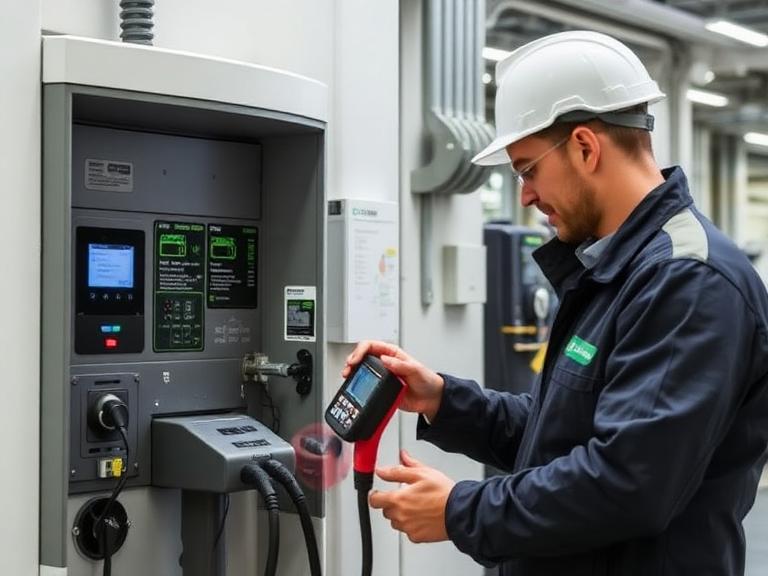
EV Charger Integration Services in Hyderabad (2026): Complete Tech & Grid Guide
Table of Contents
EV Charger Integration Services in Hyderabad (2026): Complete Tech & Grid Guide
Installing an electric vehicle charger on a wall or concrete base is only half the job. For an EV charger to work safely, share electricity fairly, accept digital payments, and appear on driver navigation apps, every piece of hardware and software must work together seamlessly. This process is known as system integration.
Across Hyderabad—from bustling corporate campuses in HITEC City, Gachibowli, and Nanakramguda to gated apartment communities in Kondapur, Tellapur, and Kompally—property owners and Charge Point Operators (CPOs) rely on EV charger integration services in Hyderabad to turn standalone charging boxes into smart, connected, and revenue-generating networks.


This simple, practical guide explains everything you need to know about EV charger integration in Hyderabad. We will break down how engineers connect chargers to TGSPDCL power grids, rooftop solar systems, building energy management software, corporate employee access cards, and public UPI payment apps without using confusing technical jargon.
What Are EV Charger Integration Services?
Think of an EV charger like a modern smartphone. Without a mobile network, apps, and a payment wallet, a smartphone is just a piece of glass and metal. Similarly, a physical EV charger needs to be connected—or integrated—with several external systems to operate effectively.
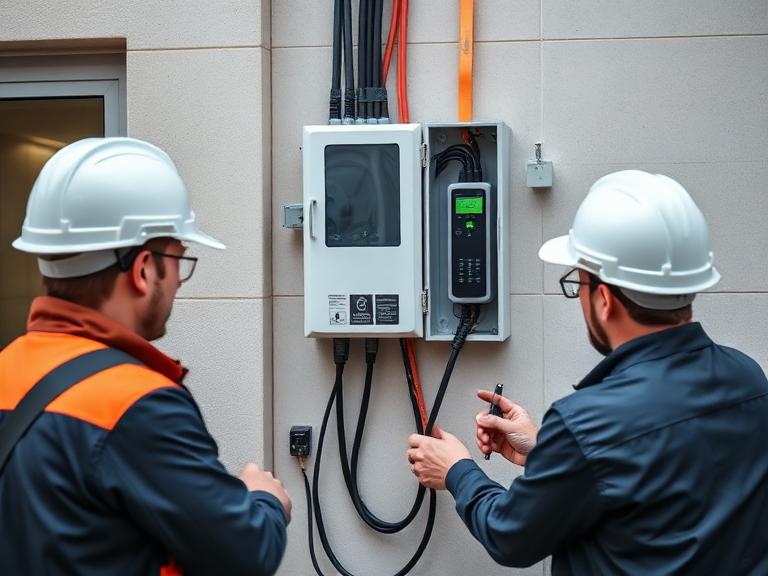
EV charger integration services in Hyderabad bring together four distinct layers so they communicate smoothly:
1. Electrical Grid and Building Power Integration
Connecting the charger safely to your building’s main electrical panel or a dedicated TGSPDCL (Telangana State Southern Power Distribution Company Limited) meter. This includes setting up smart power-sharing controls so charging cars never trip the building’s main circuit breaker.
2. Renewable Energy and Solar Integration
Linking EV chargers with rooftop solar panels and battery storage systems so cars can charge using clean, low-cost solar energy generated right on your property.
3. Cloud Software and Payment App Integration
Connecting the charger to a central cloud management dashboard using open protocols like OCPP (Open Charge Point Protocol) and OCPI (Open Charge Point Interface). This allows drivers to find your station on maps, scan a QR code, and pay via UPI or digital wallets.
4. Building Management and Access Control Integration
Connecting workplace or apartment chargers with existing office employee ID badges, resident RFID access cards, or parking barrier gates so only authorized users can plug in.
Why System Integration Is Essential for Hyderabad Properties
Whether you manage an IT park, a shopping mall, a hotel, or a residential housing society in Greater Hyderabad, proper integration solves critical daily operational challenges:
Avoiding Building Power Overloads
Many commercial buildings and apartment complexes in areas like Banjara Hills, Jubilee Hills, Madhapur, and Miyapur have fixed electricity load limits sanctioned by TGSPDCL. If dozens of drivers plug in at the exact same time, the sudden spike in power demand can trip main breakers or trigger heavy utility penalties. Integrated load management links the chargers to the building’s main power meter, automatically balancing charging speeds based on available spare electricity.
Enabling Easy Digital Payments and Billing
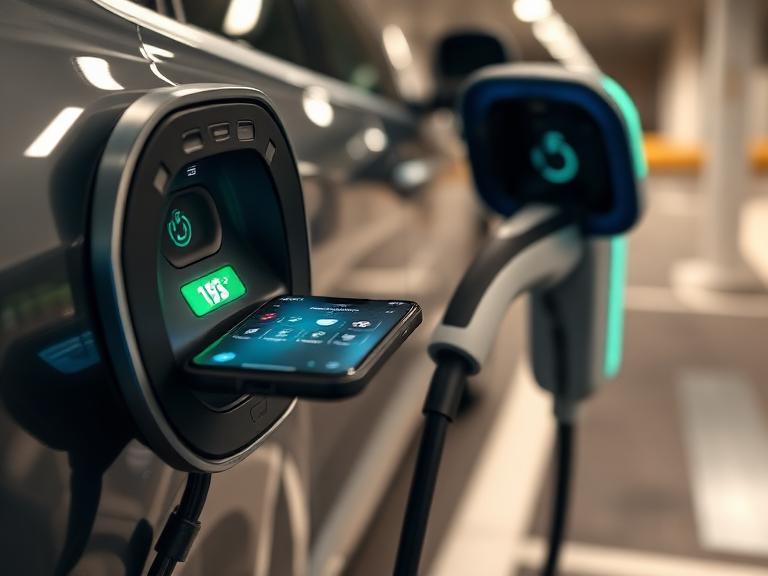
Nobody wants to carry cash or deal with manual receipts just to charge their car. Through payment and software integration, drivers simply scan a QR code on the charger with any UPI app (such as Google Pay, PhonePe, or Paytm) to start charging. For apartment societies, integration links each resident’s RFID tap card to their flat number, generating automatic monthly electricity bills.
Listing Chargers on Popular EV Navigation Apps
If you own a public charging station along the Outer Ring Road (ORR), Shamshabad Airport corridor, or a retail plaza, drivers need to know your charger exists and whether it is currently free. Roaming integration publishes your station’s live availability, connector types, and pricing onto major EV navigation apps and state platforms like TGEV.
Managing Multiple Charger Brands on One Screen
Over time, many properties buy AC wallboxes from one brand and DC fast chargers from another. Without proper software integration, facility managers have to log into three or four separate apps just to check if their chargers are working. Integration brings all brands together into a single, easy-to-read control dashboard.
Key Types of EV Charger Integration in Hyderabad
Professional integration teams in Hyderabad customize their work depending on your property type and business goals:
1. Cloud CPMS and OCPP Software Integration
The foundation of smart charging is connecting physical hardware to a Charge Point Management System (CPMS). Integration engineers configure the charger’s internal modem—via 4G M2M SIM card, Wi-Fi, or wired Ethernet—to communicate with the cloud using the OCPP 1.6J or OCPP 2.0.1 standard. Once integrated, property managers can monitor live charging sessions, view total energy dispensed, push overnight software updates, and restart frozen chargers remotely from a laptop or phone.
2. Payment Gateway and Public Roaming Integration (OCPI)
For commercial stations, integration specialists connect the cloud software to Indian payment gateways so drivers can pay effortlessly via UPI QR codes, credit cards, or prepaid app wallets. Furthermore, by activating OCPI (Open Charge Point Interface) roaming, your chargers become visible and accessible to drivers using third-party charging apps, fleet management cards, and connected car dashboards—boosting station utilization and daily revenue.
3. Dynamic Load Management (DLM) and BMS Integration
In large corporate campuses in HITEC City and Gachibowli, EV chargers are integrated directly with the building’s existing Building Management System (BMS). Engineers clamp smart current sensors onto the main incoming power cables. The integrated software monitors building air conditioning, elevators, and lighting loads in real time. Whenever building power usage rises, the system gently lowers EV charging power; when building power usage drops in the evening, EV charging speeds automatically ramp back up to maximum capacity.
4. Rooftop Solar and Battery Storage Integration
Hyderabad enjoys abundant sunshine throughout most of the year, making rooftop solar panels very popular among IT parks, factories, and gated villas. Solar EV integration links the solar inverter with the EV charger controller. When solar panels produce excess electricity during sunny afternoon hours, the integration system directs that free green power straight into parked electric vehicles instead of exporting it back to the grid at low rates. This cuts charging electricity costs dramatically and helps companies meet green sustainability goals.
5. Corporate ID Card, RFID, and Parking Gate Integration
In workplace garages and gated residential communities, security and access control are top priorities. Integration specialists link EV charger card readers with the building’s existing employee access database or society resident portal. Employees simply tap their regular office ID badge to unlock the charger. In automated commercial parking lots, chargers can also be integrated with Automatic Number Plate Recognition (ANPR) cameras and boom barriers so charging fees and parking fees are combined into a single seamless checkout.
6. TGREDCO and TGEV State Platform Integration
Under Telangana’s electric mobility guidelines managed by TGREDCO (Telangana State Renewable Energy Development Corporation), public charging stations—especially those receiving government support or operating in designated public zones—must share live operational and status data with the state’s unified TGEV monitoring platform. Integration engineers configure the secure data feeds required to keep your station compliant with state reporting rules.
Step-by-Step EV Charger Integration Process in Hyderabad
Connecting your charging infrastructure into a unified, smoothly running system follows a clear five-step workflow:
Step 1: Technical Audit and System Architecture Planning
Integration engineers visit your site to inspect your existing or planned EV chargers, main electrical panels, solar inverters, and internet connectivity. They verify whether your chargers support open protocols like OCPP and check mobile signal strength in basement parking levels.
Step 2: Network and Hardware Connectivity Setup
Before software can talk to hardware, a rock-solid physical connection is built. Engineers install industrial 4G SIM cards with multi-network coverage, run shielded Ethernet cables through basement trays, or install high-gain external antennas so chargers never drop offline. Smart energy meters and current sensors are wired into the main electrical distribution board.
Step 3: Cloud Software Onboarding and OCPP Configuration
Technicians configure each charger’s internal network settings to point securely to your chosen cloud management platform. Each charging port is mapped with accurate GPS coordinates, connector specifications (such as CCS2 or Type 2), maximum kilowatt output, and safety shutdown rules.
Step 4: Payment, Access, and Load Balancing Setup
Engineers integrate your bank account and UPI payment gateway for commercial billing, or upload approved employee and resident RFID card lists for private access. Dynamic Load Management thresholds are programmed to match your sanctioned TGSPDCL electricity load limit, and solar inverter links are calibrated.
Step 5: End-to-End Testing and Live Commissioning
Finally, the integration team conducts real-world testing using diagnostic tools and electric vehicles. They verify that scanning a QR code triggers a live UPI payment, confirm that the charger starts and stops smoothly, test that power throttling works when building load increases, and verify that live station status updates accurately on mobile maps.
Common Integration Challenges in Hyderabad and How Experts Solve Them
Integrating EV chargers into real-world buildings in Hyderabad often presents practical hurdles. Experienced local engineers solve these issues routinely:
Weak Mobile Signals in Multi-Level Basements
Many commercial towers and high-rise apartments in Cyberabad have two or three levels of underground basement parking where cellular signals drop completely. Integration specialists overcome this by installing wired Ethernet networks with local switches or placing cellular signal boosters near basement ramps so cloud communication stays uninterrupted.
Mixing Older Legacy Chargers with New Smart Units
Some properties already own older, basic chargers that lack built-in internet connectivity. Instead of throwing away working hardware, integration teams install external OCPP smart gateway boxes inside the electrical cabinet, bringing older chargers onto the exact same mobile app and billing dashboard as brand-new units.
Ensuring Safe Earthing and Surge Protection
When integrating sensitive digital meters, communication modems, and solar inverters with high-power EV chargers, electrical noise or poor grounding can disrupt data signals. Engineers ensure that chemical earthing pits maintain resistance strictly below 1 Ohm as per TGSPDCL and CEIG safety rules, and install Surge Protection Devices (SPDs) to protect communication boards from monsoon lightning surges.
Frequently Asked Questions (15 Detailed FAQs)
1. What are EV charger integration services?
EV charger integration services involve connecting physical EV chargers with building electrical systems, rooftop solar panels, cloud management software, payment gateways, and access control cards so the entire charging setup operates smoothly as one unified system.
2. Can I integrate EV chargers from different manufacturers onto one software platform?
Yes. As long as your chargers support the open OCPP (Open Charge Point Protocol) standard, integration engineers can connect AC and DC chargers from multiple brands onto a single cloud management dashboard.
3. How does solar EV charger integration work in Hyderabad?
Solar integration connects your building’s rooftop solar inverter with your EV charging controller. When your solar panels generate surplus electricity during the day, the system automatically directs that clean energy into parked electric cars, lowering your monthly TGSPDCL electricity bill.
4. What is Dynamic Load Management (DLM) integration?
Dynamic Load Management integrates your EV chargers with smart power sensors on your building’s main electrical panel. It tracks real-time building electricity usage and automatically adjusts EV charging speeds so your building never exceeds its sanctioned power limit or trips main breakers.
5. How do commercial EV chargers in Hyderabad accept UPI payments?
During software integration, engineers link your charging management platform with a certified Indian payment gateway. Drivers simply scan a QR code on the charger or mobile app to pay instantly using any UPI app, debit/credit card, or wallet.
6. Can workplace EV chargers be integrated with existing office employee ID cards?
Yes. Integration specialists can sync your EV charger RFID readers with your company’s existing access control system, allowing employees to tap their regular office ID badge to start charging without needing a separate card or app.
7. What is OCPI roaming integration and why does it matter for public chargers?
OCPI (Open Charge Point Interface) is a protocol that connects your charging station software with public EV navigation apps and fleet networks. It allows outside EV drivers to see your charger’s live availability on their map apps and pay seamlessly, bringing more customers to your station.
8. Do I need to integrate my public charging station with Telangana’s TGEV platform?
Under Telangana state guidelines managed by TGREDCO, public EV charging stations—particularly those receiving government incentives or operating on public land—are required to integrate with the state’s TGEV platform to share live availability and operational data.
9. How do integration teams handle poor internet connectivity in apartment basements?
For underground basements in areas like HITEC City, Gachibowli, or Kondapur where mobile signals are weak, integration engineers run wired Ethernet cables, set up local Wi-Fi access points, or install external high-gain cellular antennas to keep chargers connected to the cloud.
10. Can older, non-smart EV chargers be integrated into a modern cloud app?
Yes. Integration engineers can retrofit older standalone chargers with an external OCPP communication gateway and a digital energy meter, enabling app control, remote monitoring, and automated billing without replacing the main charger hardware.
11. How long does it take to complete EV charger software and system integration?
For a typical commercial building or apartment society with 5 to 20 chargers, network setup, cloud onboarding, payment gateway integration, and load balancing configuration usually take 2 to 5 working days once physical electrical wiring is complete.
12. Does EV charger integration require approval from TGSPDCL?
Software and app integration do not require utility approval. However, if you are integrating a new dedicated EV meter drop (under the LT-IX or HT-EV tariff) or upgrading your building’s sanctioned electrical load, your integration partner will coordinate the required approvals with TGSPDCL.
13. How does BMS (Building Management System) integration help large IT parks?
Integrating EV chargers with a building’s central BMS gives facility managers a single control room view of total campus energy use, fire alarm interlocks (which automatically cut charger power if a basement fire alarm triggers), and backup generator load rules.
14. Is customer payment and usage data safe in integrated EV charging systems?
Yes. Professional integration services use encrypted TLS 1.3 internet connections, secure OCPP security profiles, and PCI-DSS compliant payment gateways to ensure all user information, billing records, and grid commands remain completely secure.
15. How do I choose the right EV charger integration partner in Hyderabad?
Look for a company in Hyderabad that has strong experience in both high-voltage electrical engineering (following TGSPDCL and CEIG safety norms) and open-protocol software integration (OCPP 1.6J/2.0.1 and OCPI), along with a local support team for ongoing maintenance.