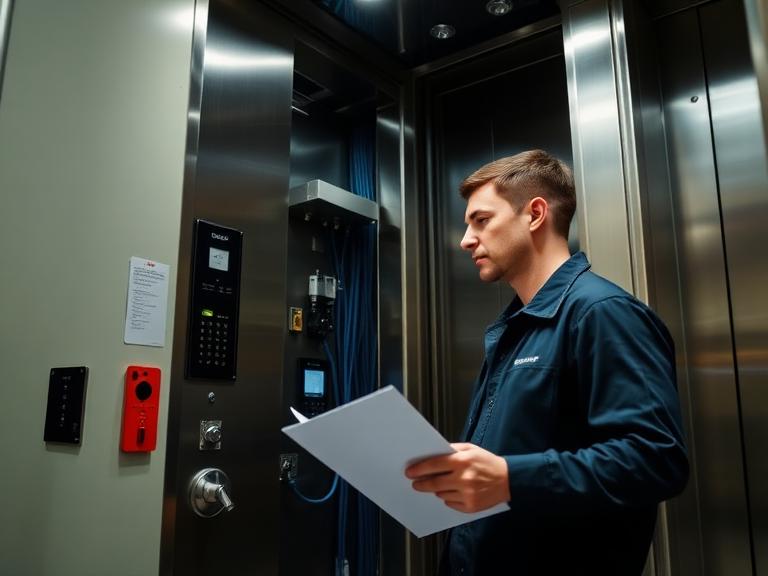
Elevator Motor Rewinding in Hyderabad | Expert Traction Motor Repair
Table of Contents
Elevator Motor Rewinding in Hyderabad | Expert Traction Motor Repair
Hyderabad’s vertical urban footprint relies on thousands of traction and hydraulic elevators operating continuously across residential apartments, high-rise IT parks, commercial shopping complexes, and healthcare facilities. From dense residential hubs in Kukatpally, Kondapur, Miyapur, Kompally, and LB Nagar to high-intensity commercial corridors in HITEC City, Gachibowli, Begumpet, and Secunderabad, elevator electric motors are the core drive units powering daily movement.
Operating in a heavy-duty environment characterized by frequent start-stop cycles, summer heat, power grid fluctuations, and monsoon humidity, elevator motors endure immense thermal and electrical stress. Over time, enamel insulation degrades, winding turns short-circuit, or single-phasing burns out the stator coils—causing total elevator shutdown.


When an elevator motor burns out, replacing it with a brand-new unit can involve high capital costs and long lead times from original manufacturers. Professional elevator motor rewinding in Hyderabad provides a fast, cost-effective engineering alternative—restoring 98% to 100% of the motor’s original operating efficiency, thermal tolerance, and torque profile at 30% to 50% of the cost of a new motor.
1. Understanding Elevator Motor Architecture & Burnout Modes
Elevator drive motors differ significantly from standard industrial continuous-duty induction motors. They are specifically engineered for S4 intermittent periodic duty with high starting torque, handling up to 180 to 240 start-stop cycles per hour while delivering whisper-quiet, vibration-free performance.
┌─────────────────────────────────────────────────────────────────────────┐
│                 ELEVATOR TRACTION MOTOR SUB-ASSEMBLIES                  │
├─────────────────────────────────────────────────────────────────────────┤
│ [Stator Core Lamination] ──> [Class H Dual-Coat Copper Windings]        │
│                                           │                             │
│ [High-Precision Rotor Shaft] <── [VPI Resin Encapsulation Insulation]   │
│                                           │                             │
│                         [SKF/FAG C3 Shielded Bearings]                  │
└─────────────────────────────────────────────────────────────────────────┘
Primary Causes of Elevator Motor Burnout in Hyderabad
                            MOTOR BURNOUT ARCHITECTURE
                                         │
    ┌───────────────────┬────────────────┴───────────────────┬───────────────────┐
    ▼                   ▼                                    ▼                   ▼
SINGLE-PHASING EVENTS   EXTREME SUMMER HEAT                  POWER GRID SURGES   MECHANICAL OVERLOAD
─────────────────────   ───────────────────                  ─────────────────   ───────────────────
• Grid Phase Loss       • Unventilated Machine Room          • Voltage Spikes    • Mechanical Brake Drag
• Blown Fuse Cutout     • Enamel Insulation Breakdown        • Shorted Turns     • Counterweight Unbalance
- Power Grid Fluctuations & Single-Phasing: Hyderabad’s power distribution grid occasionally experiences phase drops or voltage unbalances. When a 3-phase motor loses one phase while running, it draws up to $173\%$ of its rated full-load current through the remaining two phases, rapidly charring copper enamel insulation and burning out phase coils within minutes.
- Extreme Summer Machine Room Temperatures ($>45^\circ\text{C}$): Elevator machine rooms located on rooftops absorb intense heat during Hyderabad summers. High ambient temperatures degrade standard Class B or Class F motor insulation, causing inter-turn short circuits.
- Mechanical Brake Dragging: Worn or improperly adjusted electromechanical brake shoes fail to lift fully when the motor energizes. The motor works against mechanical brake friction, generating severe thermal overload across the stator windings.
- Inverter Switching Stress (VVVF Drives): Variable Voltage Variable Frequency (VVVF) drives adjust motor speed using High-Frequency Pulse Width Modulation (PWM). These steep voltage spikes ($\frac{dV}{dt}$) break down standard wire enamel, requiring specialized inverter-duty dual-coated copper wire.
2. Advanced Rewinding Technology: Class H Copper & VPI Process
Quality motor rewinding requires precision materials and advanced processing equipment. Standard local repair shop methods (using hand dipping and air-drying varnish) fail under high-stress elevator operating conditions.
┌─────────────────────────────────────────────────────────────────────────┐
│              LOCAL HAND-DIP REPAIR VS. HIGH-TECH VPI REWINDING          │
├───────────────────────────────┬─────────────────────────────────────────┤
│ LOCAL HAND-DIP SHOP METHOD    │ HIGH-TECH CLASS H VPI REWINDING         │
├───────────────────────────────┼─────────────────────────────────────────┤
│ • Class F/B standard wire     │ • Class H Dual-Coat Copper (180°C)      │
│ • Air-dry solvent varnish     │ • Solventless Class H VPI Resin         │
│ • Traps air pockets & moisture│ • Deep vacuum evacuates all air voids   │
│ • Poor thermal conductivity   │ • Superior heat dissipation & insulation│
│ • High risk of premature burnout│ • Extended 10–15 year service life     │
└───────────────────────────────┴─────────────────────────────────────────┘
1. Dual-Coated Class H Magnet Wire ($180^\circ\text{C}$ / $200^\circ\text{C}$ Rating)
Professional elevator motor rewinding strictly utilizes 99.9% pure electrolytic Grade-1 copper wire insulated with a dual-coat structure: an inner layer of Polyesterimide (THEIC) for high dielectric strength and an outer topcoat of Polyamide-imide (PAI) for mechanical abrasion resistance and resistance to high-frequency VVVF drive voltage spikes.
2. Vacuum Pressure Impregnation (VPI) System
Vacuum Pressure Impregnation (VPI) is the gold standard for electric motor insulation.
                         VACUUM PRESSURE IMPREGNATION (VPI)
                                         │
         ┌───────────────────────────────┴───────────────────────────────┐
         ▼                                                               ▼
DEEP VACUUM PHASE                                               HIGH PRESSURE RESIN DIPPING
─────────────────                                               ───────────────────────────
Rewound stator placed in sealed tank; 100% of air voids         Flooded with solventless resin under 6 bar
and moisture evacuated from slot cavities.                      pressure, completely encapsulating every coil.
- Step 1 (Vacuum Phase): The rewound stator is placed inside a pressure vessel. A deep vacuum ($<1\text{ Torr}$) is pulled to evacuate all air, gases, and moisture from the deep slot cavities between individual copper turns.
- Step 2 (Resin Ingress & Pressure Phase): Solventless Class H resin is introduced into the tank under hydraulic pressure ($6\text{ bar}$), forcing the resin deep into every microscopic void.
- Step 3 (Controlled Oven Baking): The stator is cured in a thermostatically controlled baking oven at $150^\circ\text{C}$ to $165^\circ\text{C}$ for 8 to 12 hours, creating a solid, moisture-proof, vibration-resistant insulation mass.
3. Step-by-Step Execution Workflow for Elevator Motor Rewinding
Rewinding an elevator traction motor requires a disciplined engineering sequence executed in a specialized workshop (such as facilities in Balanagar or Jeedimetla industrial zones).
┌───────────────────────────────────────────────────────────────────────────┐
│                    MOTOR REWINDING EXECUTION TIMELINE                     │
├───────────────────────────────────────────────────────────────────────────┤
│ STEP 1: Site Isolation, Uncoupling, Electrical Marking & Removal (Day 1) │
│ STEP 2: Workshop Mechanical Disassembly, Stator Stripping & Cleaning (Day 1)│
│ STEP 3: Precision CNC Coil Winding & Slot Insulation Fitting (Day 2)      │
│ STEP 4: Stator Lacing, Phase Insulation & Surge Comparison Test (Day 2)   │
│ STEP 5: Vacuum Pressure Impregnation (VPI) & Oven Baking Curing (Day 3)   │
│ STEP 6: SKF/FAG Bearing Replacement, Dynamic Balancing & Reassembly (Day 3)│
│ STEP 7: High-Voltage Flash, Megger, Load Testing & Site Re-installation (Day 4)│
└───────────────────────────────────────────────────────────────────────────┘
Phase 1: Machine Room Decoupling & Initial Diagnostics
- The elevator car is parked safely at the top floor landing and mechanically secured. The main 3-phase power isolator is locked out.
- Initial diagnostic checks are recorded on-site: Insulation Resistance (Megger test), DC Winding Resistance per phase, and bearing shaft play.
- The motor is unbolted from the bedplate, uncoupled from the traction gearbox or brake assembly, and transported to the engineering workshop.
Phase 2: Workshop Stripping & Core Preparation
- The motor end-bells, rotor shaft, bearings, and terminal box are carefully disassembled.
- Worn copper windings are burned off in a temperature-controlled burnout oven ($<380^\circ\text{C}$) to preserve stator core lamination insulation.
- The bare stator slots are mechanically wire-brushed, chemically cleaned, and inspected for iron-loss core damage using a loop test.
- Custom slot liners made of high-temperature Nomex / Mylar / Nomex (NMN) composite paper are inserted into every stator slot.
Phase 3: Precision Coil Winding & Lacing
- Using automated coil winding machines, new copper coils are wound with exact turn counts, wire gauge sizes, and coil pitch parameters matching OEM factory specifications.
- Coils are inserted into stator slots with Nomex phase separators placed between adjacent phase windings to prevent inter-phase short circuits.
- Class H fiberglass sleeving is fitted over lead wires, and coil ends are laced securely with high-tensile glass-fiber cord.
                          PRECISION COIL WINDING PROCESS
                                       │
         ┌─────────────────────────────┴─────────────────────────────┐
         ▼                                                           ▼
AUTOMATED CNC COIL WINDING                                 NOMEX PHASE SEPARATION
──────────────────────────                                 ──────────────────────
Exact copper wire gauge and turn count                     High-dielectric Nomex paper prevents
wound precisely to match OEM specs.                        inter-phase flashovers under load.
Phase 4: Rotor Balancing & SKF/FAG Bearing Replacement
- Worn motor bearings are pulled using hydraulic pullers. New C3-clearance SKF or FAG shielded bearings lubricated with high-temperature polyurea grease are heat-fitted onto the rotor shaft.
- The rotor shaft assembly is mounted on a computerized dynamic balancing machine to correct unbalance down to ISO 1940 Grade G2.5 thresholds, eliminating operational vibration.
Phase 5: Testing, Calibration & Site Re-commissioning
Before leaving the workshop, every rewound motor undergoes rigorous electrical quality checks:
- Megger Insulation Test: Minimum $100\text{ M}\Omega$ at $1000\text{V}$ DC.
- High-Voltage Breakdown Test (Flash Test): $2000\text{V}$ AC applied for 60 seconds to verify dielectric strength.
- Surge Comparison Test: High-voltage impulse surges applied across turns to detect hidden micro-fissures in coil insulation.
- No-Load & Phase Current Balance Test: Running trial on 3-phase supply to measure current draw equality across phases ($<2\%$ variance).

4. Telangana Lift Act & CEIG Safety Compliance for Rewound Motors
In Telangana, all vertical transit electrical equipment operates under statutory supervision enforced by the Chief Electrical Inspectorate to Government (CEIG) under the Telangana Lifts, Escalators, and Passenger Conveyors Act.
                 TELANGANA CEIG STATUTORY MOTOR COMPLIANCE
                                      │
         ┌────────────────────────────┴────────────────────────────┐
         ▼                                                         ▼
   MANDATORY SAFETY CODE AUDITS                             LEGAL & SAFETY RISKS
  ────────────────────────────                             ─────────────────────
  ✔ Insulation Resistance Megger >5 MΩ                     ✖ Immediate License Cancellation
  ✔ Phase Current Balance Verification                     ✖ Building Owner Civil Liability
  ✔ Calibrated Thermal Overload Relays                     ✖ Rejection of Insurance Claims
  ✔ Proper Earthing & Bonding Continuity                   ✖ Severe Entrapment Hazard
Operating a lift with an uncertified or improperly rewound motor risks insulation breakdown, phase fault short-circuits, and machine room fires. Certified rewinding restores insulation integrity to meet Bureau of Indian Standards specifications (IS 325 for three-phase induction motors and IS 14665 for electric traction lifts), passing mandatory CEIG state licensing audits.
5. Cost Analysis & Pricing Matrix in Hyderabad
Elevator motor rewinding costs depend on motor power rating (HP/kW), operating speed, drive type (geared vs. gearless PMSM), and insulation specifications.
                      COST ALLOCATION OF MOTOR REWINDING
    ┌──────────────────────────────────────────────────────────────┐
    │  99.9% Pure Class H Dual-Coat Copper Wire      [40% - 45%]   │
    │  Precision Engineering Labor & Fitting         [25% - 30%]   │
    │  SKF/FAG Bearings, VPI Resin, Nomex Insulation [15% - 20%]   │
    │  Dynamic Balancing, Rigging & On-Site Testing  [10% - 15%]   │
    └──────────────────────────────────────────────────────────────┘
Estimated Elevator Motor Rewinding Cost Breakdown in Hyderabad
| Motor Rating / Lift Profile | Typical Kilowatt (kW) | Scope of Rewinding & Overhaul | Estimated Budget (INR)* |
| Low-Rise Apartment Motor | 2.2 kW – 5.5 kW (3–7.5 HP) | Class H copper rewinding, VPI resin dipping, new SKF bearings, bench testing | ₹12,500 – ₹24,000 |
| Mid-Rise Society Traction Motor | 7.5 kW – 15 kW (10–20 HP) | Inverter-duty Class H copper, Nomex liners, SKF/FAG bearings, rotor balancing | ₹28,000 – ₹48,000 |
| High-Rise / Commercial Lift Motor | 15 kW – 22 kW (20–30 HP) | High-capacity Class H dual-coat copper, core lamination work, VPI, load testing | ₹48,000 – ₹78,000 |
| PMSM Gearless Elevator Stator | 5.5 kW – 18 kW (Gearless) | Precision stator coil rewinding, magnet array check, thermal sensor embedding | ₹75,000 – ₹1,45,000+ |
*Note: Actual project estimates depend on site inspection, motor RPM (750/1000/1500 RPM), speed profile (single-speed, two-speed, VVVF), and extent of core lamination damage.
6. Sector-Specific Solutions Across Hyderabad Micro-Markets
                      HYDERABAD SECTOR-SPECIFIC SOLUTIONS
                                      │
    ┌─────────────────────────────────┼─────────────────────────────────┐
    ▼                                 ▼                                 ▼
 IT PARKS & CORPORATE             GATED RESIDENTIAL               INDUSTRIAL ESTATE HUBS
(HITEC City / Financial Dist.)  (Kukatpally / Kondapur / Miyapur) (Balanagar / Jeedimetla / Sanathnagar)
 ─────────────────────────────   ────────────────────────────────  ───────────────────────────────────
 • Inverter-Duty Copper Wire     • Fast 24–36 Hour Turnaround      • Heavy-Duty Stator Overhauls
 • High-Frequency Surge Testing  • Low-Cost RWA Rewinding Plans    • Flameproof / Rugged Winding
 • Whisper-Quiet Dynamic Balance • Single-Phasing Protection Kit   • High-Torque Freight Motor Repair
1. IT Corridors & Commercial Parks (HITEC City, Gachibowli, Financial District, Madhapur)
- Focus on inverter-duty Class H dual-coated copper wire to withstand VVVF drive switching spikes, high-frequency surge comparison testing, and ISO G2.5 precision rotor balancing for low noise.
2. Residential Communities (Kukatpally, Kondapur, Miyapur, Kompally, LB Nagar)
- Focus on 24 to 36-hour emergency fast-track service to minimize resident downtime, affordable RWA package options, and retrofitting 3-phase single-phasing protection relays.
3. Industrial Belts & Heavy Freight Lifts (Balanagar, Jeedimetla, Sanathnagar, Uppal)
- Focus on heavy-duty stator core re-lamination, high-torque freight elevator motor rewinding (2 to 5+ Ton capacity), and heavy VPI resin impregnation for high-humidity environments.
7. How to Choose a Certified Motor Rewinding Partner in Hyderabad
When selecting an elevator motor rewinding contractor in Telangana, evaluate these essential qualifications:
- In-House VPI & Balancing Facility: Ensure the vendor operates an in-house Vacuum Pressure Impregnation (VPI) plant, computerized dynamic balancing machines, and burnout ovens—rather than relying on basic manual varnish dipping.
- Grade-1 Class H Wire Certification: Demand proof of 99.9% pure electrolytic dual-coated Class H copper wire usage from reputed manufacturers (e.g., RR Shramik, Precision, Sterlite).
- Elevator Engineering Knowledge: The contractor must specialize in elevator duty motors—understanding high start-stop frequency dynamics, VVVF inverter waveforms, and IS 14665 safety codes.
- Written Warranty: Require a 12 to 24-month written warranty covering insulation performance, winding resistance balance, and bearing operation.
Frequently Asked Questions (FAQs)
Q1: What are the early signs that an elevator motor needs rewinding in Hyderabad?
Answer: Key warning signs include frequent tripping of the thermal overload relay or main circuit breaker, a burnt metallic or enamel smell coming from the machine room, humming or sluggish motor acceleration under load, severe casing overheating ($>80^\circ\text{C}$), low insulation resistance reading on a Megger test ($<5\text{ M}\Omega$), and single-phasing burnouts caused by power grid fluctuations.
Q2: How much does elevator motor rewinding cost in Hyderabad?
Answer: Elevator motor rewinding costs in Hyderabad range from ₹12,500 to ₹85,000+ depending on motor rating (HP/kW), speed profile (single-speed, two-speed, VVVF), insulation class, and brand. Rewinding a standard 3 HP – 7.5 HP residential apartment lift motor typically costs between ₹12,500 and ₹24,000. Larger VVVF commercial traction motors (10 HP – 25 HP) range from ₹28,000 to ₹58,000+. High-capacity PMSM gearless stators range from ₹75,000 to ₹1,45,000+.
Q3: How long does it take to rewind an elevator motor?
Answer: A standard elevator motor rewinding project takes between 2 to 4 working days. Emergency fast-track rewinding services can be executed within 24 to 36 hours. The timeline covers safe machine room decoupling, workshop stripping, stator cleaning, precision coil winding, Vacuum Pressure Impregnation (VPI), oven baking, bearing replacement, dynamic balancing, and final load testing.
Q4: What copper wire grade is used for elevator motor rewinding?
Answer: Professional elevator motor rewinding strictly utilizes 99.9% pure electrolytic Grade-1 dual-coated super-enameled copper wire with Class H insulation rating (capable of withstanding operating temperatures up to $180^\circ\text{C}$). For VVVF drive-operated motors, specialized inverter-duty wire with corona-resistant insulation is mandatory.
Q5: What is Vacuum Pressure Impregnation (VPI) and why is it important?
Answer: Vacuum Pressure Impregnation (VPI) is a process where the rewound stator is placed in a sealed pressure vessel, subjected to a deep vacuum to evacuate all air and moisture from coil interstices, and then flooded with solventless Class H insulating resin under pressure. This eliminates air gaps, improves heat dissipation, prevents coil vibration, and protects against monsoon moisture.
Q6: Can a rewound elevator motor match the performance of a brand-new motor?
Answer: Yes. When executed with high-grade Class H copper wire, precise slot-fill calculations, computer-controlled coil winding, Class H VPI resin, and new SKF/FAG bearings, a rewound motor restores 98% to 100% of its original torque, efficiency, and thermal operating threshold—at 30% to 50% of the cost of a new motor.
Q7: What causes elevator motors to burn out frequently in Hyderabad?
Answer: Elevator motor burnouts in Hyderabad are primarily caused by 3-phase power grid voltage fluctuations and single-phasing, unventilated machine rooms in extreme summer heat ($>45^\circ\text{C}$ ambient), passenger overloading, mechanical brake dragging, frequent short-distance starts, and water/moisture ingress during monsoon seasons.
Q8: What is single-phasing and how does it damage elevator motors?
Answer: Single-phasing occurs when one phase of a 3-phase power supply drops due to a blown fuse, loose connection, or grid failure. The motor continues to run on two phases, drawing excessive current (up to $173\%$ of normal load) through the remaining active windings, rapidly overheating the insulation and causing localized winding burnouts within minutes.
Q9: Is elevator motor rewinding compliant with the Telangana Lift Act and CEIG norms?
Answer: Yes. Professional motor rewinding restores electrical insulation, dielectric strength, and thermal safety thresholds to satisfy Bureau of Indian Standards codes (IS 325 / IS 14665) and Chief Electrical Inspectorate to Government (CEIG) state safety audit requirements.
Q10: What tests are performed on a rewound elevator motor before installation?
Answer: Before dispatch, a rewound motor undergoes a sequence of diagnostic tests: Insulation Resistance (Megger Test at 1000V), DC Winding Resistance Balance, High-Voltage Breakdown Test (Flash Test at 2000V), Surge Comparison Test, No-Load Current & Speed Verification, Thermal Imaging, and Rotor Dynamic Balancing.
Q11: Should we rewind an old motor or upgrade to a PMSM gearless machine?
Answer: If the existing traction gearbox, bedplate, and control system are in good working condition, rewinding the current motor is a fast, cost-effective solution (saving up to 70% compared to modernization). However, if the lift is over 20 years old with an obsolete controller and worn gearbox, upgrading to a PMSM gearless motor provides long-term energy savings of up to 50%.
Q12: Will building residents have lift access while the motor is being rewound?
Answer: In multi-elevator buildings, the unit undergoing motor rewinding is isolated safely on inspection mode while adjacent elevators handle resident traffic. In single-lift buildings, fast-track workshop execution or temporary standby motor installation is arranged to minimize resident inconvenience.
Q13: Do you replace motor bearings during the rewinding process?
Answer: Yes. Every motor rewinding project includes mandatory replacement of drive-end and non-drive-end bearings with genuine high-precision C3-clearance SKF, FAG, or NSK bearings, lubricated with high-temperature synthetic grease to ensure smooth, whisper-quiet operation.
Q14: Which elevator motor brands do you rewind in Hyderabad?
Answer: Services cover all major global and Indian elevator motor manufacturers, including Otis, Schindler, KONE, Thyssenkrupp (TKE), Bharat Bijlee, Siemens, ABB, Crompton Greaves, Marathon, Johnson, and custom local manufacturer traction motors.
Q15: Which areas in Greater Hyderabad do you cover for elevator motor rewinding?
Answer: Services cover all commercial, industrial, and residential zones across Greater Hyderabad and Secunderabad, including Jeedimetla, Balanagar, Sanathnagar, Kukatpally, HITEC City, Gachibowli, Madhapur, Kondapur, Jubilee Hills, Banjara Hills, Begumpet, Secunderabad, Uppal, and LB Nagar.
Conclusion: Restore Your Elevator Drive Performance Today
Operating an elevator with an overheating, sluggish, or burnt motor exposes building owners, RWAs, and facility managers to sudden equipment shutdowns, severe safety hazards, and legal non-compliance under Telangana state laws. Investing in professional elevator motor rewinding in Hyderabad provides Class H dual-coated copper rewinding, Vacuum Pressure Impregnation (VPI), computerized rotor dynamic balancing, and complete CEIG safety certification—restoring safe, whisper-quiet, and energy-efficient vertical transit across every floor.