Complete Guide to EV Charger Installation Cost (2026 Breakdown)
Table of Contents
Complete Guide to EV Charger Installation Cost (2026 Breakdown)
Installing an Electric Vehicle (EV) charger at home or for a commercial property involves understanding the overall EV charger installation cost. Total expenses typically range from $500 to $2,500+ (₹25,000 to ₹1,20,000+) for standard residential Level 2 setups, while commercial DC fast chargers range higher based on grid infrastructure upgrades.
This comprehensive guide details hardware pricing, electrician labor costs, electrical upgrades, permits, maintenance, and relevant JSON-LD structured schemas to optimize your site’s SEO.


EV Charger Installation Cost Overview
The primary factors driving installation expenses include the charger level (Level 1, Level 2, or DC Fast Charger), required panel upgrades, wiring distance, labor rates, and local permitting requirements.
| Charger Type | Average Hardware Cost | Average Installation & Labor Cost | Total Estimated Cost |
| Level 1 (120V / 3.3 kW) | $0 – $200 (₹0 – ₹15,000) | $0 – $300 (₹2,000 – ₹5,000) | $0 – $500 (₹5,000 – ₹15,000) |
| Level 2 (240V / 7.4 kW – 11 kW) | $400 – $1,000 (₹20,000 – ₹50,000) | $400 – $1,500 (₹5,000 – ₹30,000) | $800 – $2,500 (₹25,000 – ₹70,000) |
| DC Fast Charging (30 kW – 180 kW+) | $10,000 – $35,000+ (₹7L – ₹25L+) | $5,000 – $20,000+ (₹3L – ₹10L+) | $15,000 – $55,000+ (₹10L – ₹35L+) |
Detailed Cost Breakdown of Key Components
Understanding the breakdown allows homeowners and business managers to budget accurately before hiring a licensed electrician.
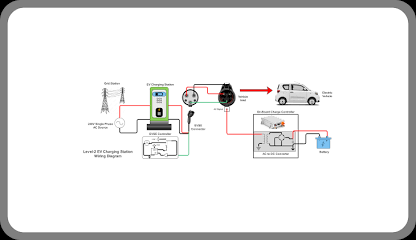
Level 2 EV Charging System Connections. Source: Wondershare EdrawMax / Level-2 EV Charging Station Wiring Diagram (Free Download)
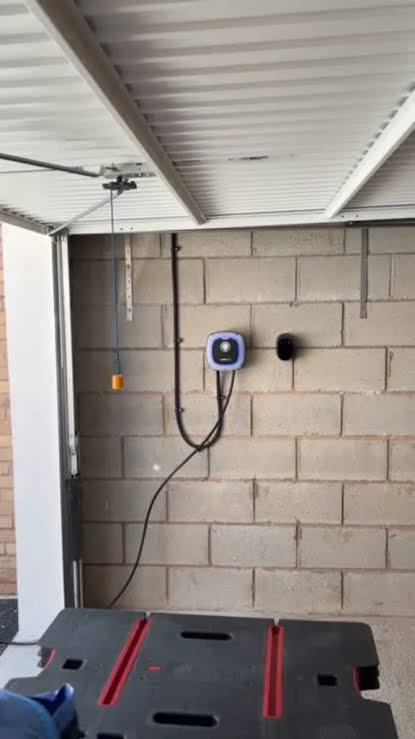
Garage Wallbox Installation. Source: Wave Electrical Solutions / Wall Box EV Charger Installation in Newquay – Wave Electrical …
1. Charger Hardware Costs
- Level 1 Chargers: Standard 3-pin or portable trickle chargers come bundled with most electric vehicles. Separate replacement units cost between $150 and $300.
- Level 2 Wallbox Chargers: Operating on 240V single-phase or three-phase connections, standard wallboxes range between $400 and $1,000 (₹20,000 to ₹50,000). Smart features (Wi-Fi monitoring, scheduling, load balancing) add roughly $100 to $250 to the hardware cost.
2. Electrical Panel & Infrastructure Upgrades
- Circuit Breaker & Subpanel: Installing a dedicated 40A or 50A double-pole circuit breaker costs $100 – $300. If your main panel lacks open slots, a subpanel costs $400 – $1,000.
- Electrical Panel Upgrade (100A to 200A): Older homes requiring a main breaker box upgrade to handle high-amp charging should expect additional costs of $1,500 – $3,500.
3. Wiring, Conduit, and Labor
- Cable Runs: Wiring costs average $6 to $12 per linear foot. A charger located adjacent to the main panel costs significantly less than a run requiring 50+ feet through walls or underground conduit.
- Electrician Labor Rates: Certified electricians charge between $75 and $150 per hour. Standard home installations take 3 to 6 hours.
Step-by-Step Installation Process
To ensure safety and local code compliance, follow these sequential steps when adding an EV charging station:
1.Evaluate Existing Electrical Load:Determine main panel capacity before purchasing hardware.
Check your main circuit breaker panel to determine if it can support a dedicated 40-amp or 50-amp 240V circuit. Consult a licensed electrician or your power utility (DISCOM) if load sanction upgrades are needed.
2.Select and Purchase the Charger:Match charger specs with your vehicle’s onboard charger.
Choose between hardwired and plug-in (NEMA 14-50) wallboxes. Match output kW (e.g., 7.4 kW vs 11 kW) to your vehicle’s maximum AC acceptance rate.
3.Pull Required Permits:Comply with local building codes and safety standard inspection.
Obtain necessary municipal electrical permits prior to starting physical installation to preserve property insurance coverage and warranty compliance.
4.Run Heavy-Duty Wiring & Mount Unit:Install dedicated circuit, conduit, safety breakers, and wallbox.
Run 6 AWG copper wire through protective conduit from the main panel to the parking location. Install miniature circuit breakers (MCBs) and Residual Current Devices (RCCB/RCD) for earth fault protection.
5.Inspection and Commissioning:Verify grounding resistance and perform test charge cycle.
Have local authorities or utility representatives inspect the work. Perform initial electrical load tests and pair smart connectivity functions.
Major Factors Affecting Final Costs
- Distance from Panel: A charger mounted next to the breaker box incurs baseline labor and materials costs. Running wiring through attics, crawlspaces, or trenching outdoors adds $500 to $2,000+.
- Hardwired vs. Plug-in: Hardwired units offer higher durability and higher amperage limits (up to 80A), whereas NEMA 14-50 plug-in units offer portability but require a $100–$250 commercial-grade receptacle.
- Smart Features vs. Dumb Chargers: Smart chargers featuring Time-of-Use (TOU) scheduling, solar integration, and load sharing carry higher upfront unit prices but yield long-term utility savings.