
24/7 Lift Rescue Service in Hyderabad | Emergency Elevator Entrapment Response
Table of Contents
24/7 Lift Rescue Service in Hyderabad | Emergency Elevator Entrapment Response
When an elevator stops suddenly between floors, immediate, professional intervention is necessary. Passenger entrapment causes severe anxiety, risks health emergencies, and threatens building safety compliance. Deploying a specialized lift rescue service in Hyderabad ensures rapid response, expert technical extraction, and full adherence to safety codes.
From high-density residential towers in Kondapur and Miyapur to corporate towers in Hitec City and Nanakramguda, elevator entrapments can stem from unexpected power cuts, mechanical failures, or sensor trips. Certified 24/7 emergency teams are positioned across Hyderabad to guarantee quick arrival times, safe extraction, and swift system stabilization.


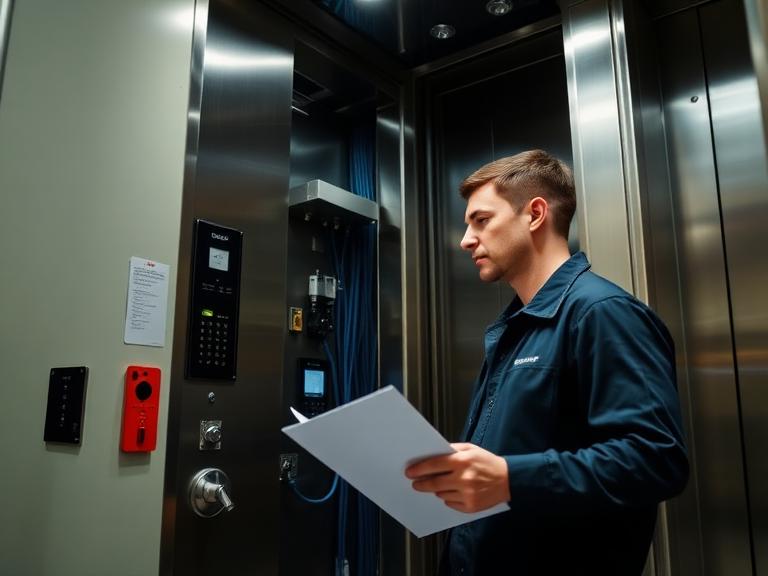
Critical Protocol: What Passengers & Security Must Do During Entrapment
                       [ ELEVATOR ENTRAPMENT OCCURS ]
                                     │
                    ┌────────────────┴────────────────┐
                    ▼                                 ▼
         [ PASSENGERS INSIDE ]             [ BUILDING SECURITY ]
         ├── Press Alarm / Call Button     ├── Confirm Car Location
         ├── Remain Calm & Seated          ├── Reassure Passengers
         └── DO NOT Pry Doors Open         └── Call Emergency Rescue Line
                    │                                 │
                    └────────────────┬────────────────┘
                                     ▼
                     [ CERTIFIED RESCUE TEAM DISPATCHED ]
Guidance for Trapped Passengers
- Stay Calm & Avoid Panic: Modern elevator cars are structurally secure, well-ventilated, and supported by multi-rope redundancy or mechanical safety gear.
- Initiate Contact: Press the yellow alarm button on the COP (Car Operating Panel) or use the intercommunication handset to connect with security. Dial the emergency hotline if phone signals are active.
- Never Force Doors Open: Attempting to force landing doors open can result in falling into the hoistway or sudden car movement. Wait for trained rescue personnel.
Instructions for Building Security Personnel
- Locate the Car: Determine the exact floor level or inter-floor shaft position of the stuck elevator car.
- Maintain Communication: Speak through the hoistway door to reassure occupants that assistance is en route.
- Call Emergency Rescue Specialists: Contact the 24/7 rapid dispatch line immediately. Avoid attempting manual brake release maneuvers unless fully trained and certified.
Causes of Elevator Entrapment in Hyderabad
Understanding why elevators fail helps property managers implement preventative safeguards:
- ARD Battery Bank Degradation: The Automatic Rescue Device (ARD) relies on emergency battery banks to drive the car to the nearest floor during a grid failure. Ineffective battery maintenance causes the car to freeze instantly when power cuts out.
- Door Sensor & Interlock Faults: Dust accumulation or misaligned infrared light curtains trick the control panel into registering a door breach, triggering an immediate emergency safety stop.
- Power Phase Reversal & Grid Surges: Rapid switching between government grid power and building diesel generator (DG) power can cause phase imbalances, tripping sensitive variable-frequency drives (VFDs).
- Safety Gear Engagement: Over-speed conditions, slack ropes, or mechanical governor trips force emergency wedge brakes onto the guide rails, locking the car firmly in place.
Step-by-Step Technical Extraction & Rescue Procedure
Certified rescue operations strictly observe Bureau of Indian Standards (BIS IS 14665) protocols:
+-------------------------------------------------------------------------+
|                  Technical Extraction Workflow                          |
+-------------------------------------------------------------------------+
| Step 1: Main Power Lockout / Tagout (LOTO) at machine room panel.       |
| Step 2: Establish direct verbal contact with trapped passengers.        |
| Step 3: Engage manual brake release lever & hand-winding wheel.         |
| Step 4: Level elevator car precisely with nearest landing zone.         |
| Step 5: Insert specialized drop-key to release outer landing doors.     |
| Step 6: Assist passenger exit & perform immediate health check.         |
| Step 7: Isolate elevator, apply danger tags, and initiate system audit. |
+-------------------------------------------------------------------------+
- Power Isolation (LOTO): The lead technician isolates the primary 3-phase power supply in the machine room using Lockout/Tagout (LOTO) switches to prevent unexpected motor activation.
- Passenger Reassurance: The ground crew establishes contact through the landing doors, informing occupants that the manual rescue procedure is underway.
- Manual Machine Room Winding: In traction systems, technicians manually disengage the mechanical motor brake using a specialized release lever while controlling the car’s descent or ascent using the hand-winding flywheel until it reaches a floor landing zone.
- Landing Door Unlock: Utilizing specialized tri-head drop keys, technicians unlock the landing door mechanics, secure the car door, and assist passengers out safely.
- Post-Extraction Safety Quarantine: The elevator remains locked out and offline until engineers diagnose the root cause and complete a full safety operational test.
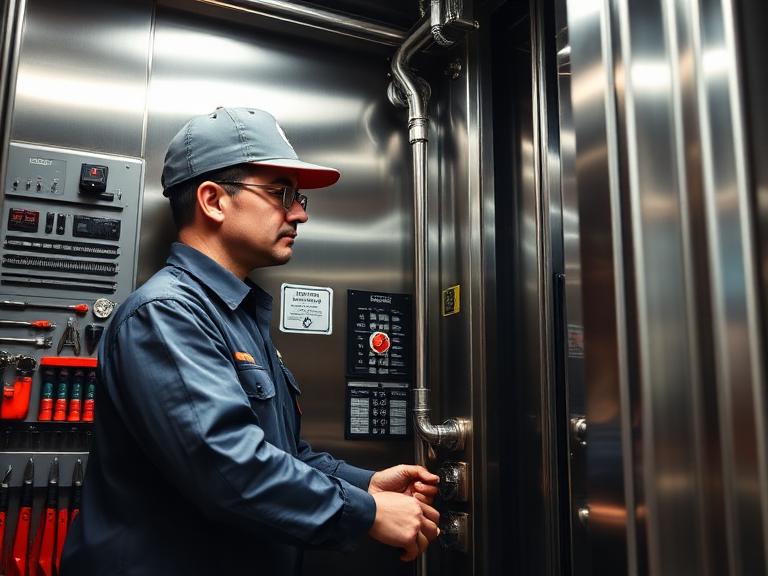
Coverage Zones Across Greater Hyderabad
Emergency response teams are stationed strategically to maintain fast response times:
| Zone Sector | Key Coverage Areas | Response Time Target |
| Zone 1: Cyberabad Corridor | Hitec City, Gachibowli, Madhapur, Kondapur, Nanakramguda, Tellapur, Rai Durg | 30 – 45 Mins |
| Zone 2: Central & West | Banjara Hills, Jubilee Hills, Somajiguda, Begumpet, Ameerpet, Punjagutta | 30 – 45 Mins |
| Zone 3: Northern Corridor | Kukatpally, Miyapur, Kompally, Jeedimetla, Secunderabad, Bowenpally | 35 – 50 Mins |
| Zone 4: Southern & Eastern | LB Nagar, Uppal, Dilsukhnagar, Mehdipatnam, Shamshabad, Attapur | 40 – 60 Mins |
Multi-Brand Rescue Capability
Technicians carry multi-brand release keys, diagnostic tools, and manual brake bypass hardware for all elevator variants:
- Gearless Traction & MRL (Machine-Room-Less): Kone MonoSpace, Schindler 3300/5500, Otis Gen2.
- Geared Traction Systems: Johnson, ThyssenKrupp, Mitsubishi, and domestic regional brands.
- Hydraulic Elevators: Commercial goods lifts, car lifts, and residential home platforms.
Frequently Asked Questions
1. What is the average response time for a lift rescue service in Hyderabad?
Emergency response teams typically arrive within 30 to 45 minutes across IT corridors like Gachibowli, Hitec City, and Madhapur, and within 45 to 60 minutes across broader Hyderabad.
2. What should passengers trapped inside a stopped elevator do first?
Press the yellow alarm button, call the emergency hotline on the car display panel, remain calm, and avoid forcing the landing doors open.
3. Why do elevators shut down suddenly in Hyderabad buildings?
Common causes include municipal grid power cuts, Automatic Rescue Device (ARD) battery failures, door curtain sensor obstructions, safety gear trips, or power phase reversals.
4. Are lift rescue services available 24/7 including public holidays?
Yes, certified emergency dispatch units operate 24 hours a day, 365 days a year, including weekends and public holidays.
5. Can security staff manually release an elevator brake during an entrapment?
No, unauthorized staff should never attempt manual brake releases without formal elevator safety training, as uncontrolled car movement can cause fatal accidents.
6. What is an Automatic Rescue Device (ARD) and why does it fail?
An ARD is a battery-backed system that safely moves the lift car to the nearest floor during power cuts. It fails primarily due to unmaintained or degraded battery banks.
7. Do your rescue units handle high-rise fast traction elevators?
Yes, technicians are trained on high-speed gearless traction elevators, MRL systems, hydraulic systems, and traditional geared machines.
8. How is a trapped passenger safely extracted if the car is stuck between floors?
Technicians use manual brake release levers and flywheel winders from the machine room to level the car with a floor before unlocking landing doors with specialized keys.
9. What equipment do emergency lift rescue teams carry?
Vehicles carry mechanical winding tools, door drop-keys, hydraulic spreaders, battery jumpers, communication radios, and medical assistance kits.
10. What safety protocols are followed post-passenger extraction?
The lift is immediately isolated, locked out with warning tags, and audited for technical faults before being cleared to resume operation.
11. How can building management reduce passenger entrapment incidents?
Enrolling in a preventive AMC, replacing ARD batteries every 2 years, conducting regular door sensor maintenance, and testing emergency power changeovers.
12. Are your technicians certified under Indian Safety Standards?
Yes, technicians hold certifications compliant with Bureau of Indian Standards (BIS) IS 14665 and local elevator safety regulatory requirements.
13. What happens if a passenger experiences medical distress inside a trapped lift?
The rescue unit coordinates with emergency medical services (108) while initiating rapid manual car leveling procedures to prioritize fast extraction.
14. Do you service foreign and domestic elevator brands during emergency calls?
Yes, emergency rescue procedures cover all major OEMs including Kone, Otis, Schindler, Johnson, Mitsubishi, ThyssenKrupp, and custom local models.
15. How can a facility sign up for dedicated priority rescue dispatch?
Property managers can sign a 24/7 Emergency Response Service Level Agreement (SLA) to guarantee under-30-minute dispatch prioritization.